After the Transformer
The architecture that built the AI age has a quadratic problem. Mamba-3 just landed at ICLR 2026 with half the state size and better accuracy than its predecessor. Neuro-symbolic AI cut robotic training from 36 hours to 34 minutes. The successor is already here — and it's stranger than you think.
Every technological epoch has its governing architecture. The steam engine ran on pistons. The internet ran on TCP/IP. The AI age ran on the transformer. But transformers have a dirty secret: they get exponentially more expensive as sequences grow longer. And in 2026, the replacements are not theoretical — they are shipping.
The transformer, introduced in Google's landmark 2017 paper Attention Is All You Need, changed everything. It powered GPT, BERT, Claude, Gemini, and every major AI system of the last decade. Its attention mechanism — which lets every token in a sequence look at every other token — was a stroke of genius. It was also a computational time bomb.
The problem is called quadratic scaling. Double the sequence length, and the computation doesn't double — it quadruples. For short texts, this is manageable. For long documents, video, genomic sequences, or a robot trying to understand its environment in real time, the math becomes brutal. Energy bills balloon. Inference slows. The transformer strains under its own success.
Enter the State Space Model
The most serious contender to dethrone the transformer is a class of architecture called State Space Models (SSMs). Unlike transformers, which must compare every word against every other word, SSMs compress information into a fixed-size "state" that evolves as it reads a sequence — like a river that carries the past forward rather than a library that memorizes every page.
The flagship SSM is Mamba, developed by researchers at Carnegie Mellon and Princeton. At ICLR 2026, its latest iteration — Mamba-3 — was formally presented. Using complex-valued recurrence and MIMO (multi-input, multi-output) processing, Mamba-3 achieves comparable performance to Mamba-2 while using half the state size. At 1.5 billion parameters, it improves average downstream accuracy by 1.8 percentage points over its predecessor while requiring significantly fewer FLOPs.
"Mamba-3's MIMO variant improves average downstream accuracy by 1.8 points while achieving comparable perplexity to Mamba-2 despite using half its predecessor's state size."— Mamba-3: Improved Sequence Modeling using State Space Principles, ICLR 2026
What makes this significant is not just the benchmark numbers. It's the trajectory. Each Mamba iteration has closed the gap with transformers on language tasks while maintaining SSMs' core advantage: linear compute and constant memory. A transformer's inference cost grows without bound as context lengthens; an SSM's does not.
The Neuro-Symbolic Wildcard
While state space models refine the continuous learning approach, a more radical departure is gaining traction: neuro-symbolic AI. This paradigm doesn't try to compress learned representations more efficiently — it fundamentally changes what is being learned. Neural networks handle perception and pattern recognition; symbolic systems handle structured reasoning and logic. Together, they aim to achieve what neither can alone.
The most dramatic demonstration came from robotics. A neuro-symbolic vision-language-action (VLA) system — combining neural perception with symbolic planning — was tested against standard neural VLAs on structured manipulation tasks. The results were startling: training time dropped from 36+ hours to 34 minutes. Task success rate jumped from 34% to 95%. Energy consumption fell by a claimed 100×. These numbers come from simulation on structured tasks, but they reveal something fundamental about the efficiency of symbolic reasoning as a complement to neural learning.
The intuition is elegant: a pure neural network must learn that if a cup is on a table and you want the cup, you should move your hand toward the table. A neuro-symbolic system can be told that, and spend its learning budget on harder problems — like recognizing which object is the cup in the first place.
The Landscape in 2026
It would be wrong to say the transformer is dead. It is not. The leading commercial models of 2026 remain transformer-based and represent the current frontier. But the research consensus is shifting: the pure transformer is an endpoint, not a destination. The field is converging on hybrid architectures that mix transformer attention with SSM recurrence, symbolic layers, or both.
| Architecture | Compute | Long Context | Reasoning | Status (2026) |
|---|---|---|---|---|
| Transformer | O(L²) | Expensive | Learned | Production dominant |
| SSM (Mamba-3) | O(L) | Native | Learned | Research → production |
| Hybrid SSM+Attn | O(L·k) | Strong | Learned | Emerging |
| Neuro-Symbolic | Task-dependent | Structured | Hybrid | Research (robotics lead) |
| World Models | O(L) | Strong | Predictive | Pre-production |
The Energy Imperative
Underlying all of this is a crisis the industry can no longer ignore: AI is consuming power at a rate that strains national grids. Training a single frontier model now costs tens of millions of dollars in energy alone. AMD's 6th-generation EPYC processors — the first high-performance computing products built on TSMC's 2nm process — represent hardware's answer, squeezing more compute per watt. But hardware improvements alone cannot outrun the quadratic scaling of transformers. The architectural question is not academic. The path to broadly useful AI that runs on devices — not just in server farms — goes through efficiency.
"Seven critical technical transitions are reshaping production AI in 2026: agentic workflows scaling beyond demos, continual learning solving catastrophic forgetting, world models challenging LLM dominance, reasoning distillation, power constraints, and hybrid architectures replacing pure transformers."— The AI Research Landscape in 2026, Adaline Labs
What This Means If You're Not a Researcher
If you use AI tools — and in 2026, most knowledge workers do — this transition will make itself felt indirectly but unmistakably. Models will get cheaper to run, which means they'll be embedded in more places. They'll handle longer inputs — full books, entire codebases, hour-long videos — without truncating. And the AI in your phone will get dramatically more capable as SSM-class models become small enough to run locally.
The deeper shift is cultural. The transformer era was defined by scale: make the model bigger, feed it more data, and it gets smarter. The post-transformer era is likely to be defined by something different — efficiency, specialization, and the intelligent combination of learning with structure. The smartest AI of 2030 may not be the one trained on the most tokens. It may be the one that knows how to reason.
The question is no longer whether transformers will be surpassed. It's how long commercial inertia will delay the transition — and which architecture, or combination of architectures, emerges as the new foundation. Mamba-3 is one answer. Neuro-symbolic systems are another. The race is the most consequential architectural competition in the history of computing.
Sources & Further Reading
- Dao, T. et al. Mamba-3: Improved Sequence Modeling using State Space Principles. ICLR 2026.
- AI Weekly. AI Research News: Neuro-Symbolic Efficiency, Mamba-3 SSMs, KV Cache Compression. April 7, 2026.
- Adaline Labs. Beyond Transformers: The 7 AI Breakthroughs Reshaping Production in 2026. 2026.
- The Boreal Times. The Next Architectural Wave: What Comes After Transformers AI in 2026 and Beyond. 2026.
- ScienceDaily. AI Breakthrough Cuts Energy Use by 100× While Boosting Accuracy. April 2026.
- Bessemer Venture Partners. AI Infrastructure Roadmap: Five Frontiers for 2026. 2026.
- GitHub – state-spaces/mamba. Mamba SSM Architecture. 2024–2026.
- Grootendorst, M. A Visual Guide to Mamba and State Space Models. 2024.
- HPCWire. Microsoft Discovery Reaches General Availability for Agentic Scientific and Engineering Workflows. June 2026.
- LinkedIn Top Content. Emerging AI Architectures Beyond Transformers. 2026.
- Stanford HAI. Stanford AI Experts Predict What Will Happen in 2026. 2026.
- MIT Technology Review. The New Biologists Treating LLMs Like an Alien Autopsy. January 2026.
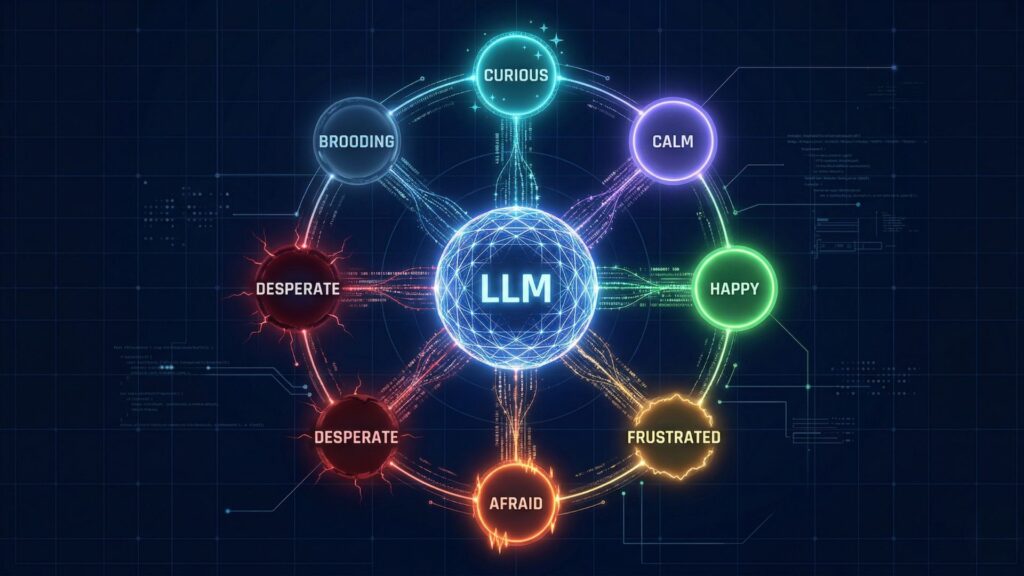
The Emotional Machine
Anthropic found 171 emotion concepts inside Claude. Adding emotional context to a prompt can boost AI performance by over 100%.

AI: The Engine of Discovery
How artificial intelligence is accelerating scientific breakthroughs across biology, materials science, and physics.
The Mirror Problem
What happens when a mind sophisticated enough to model other minds turns that lens on itself?
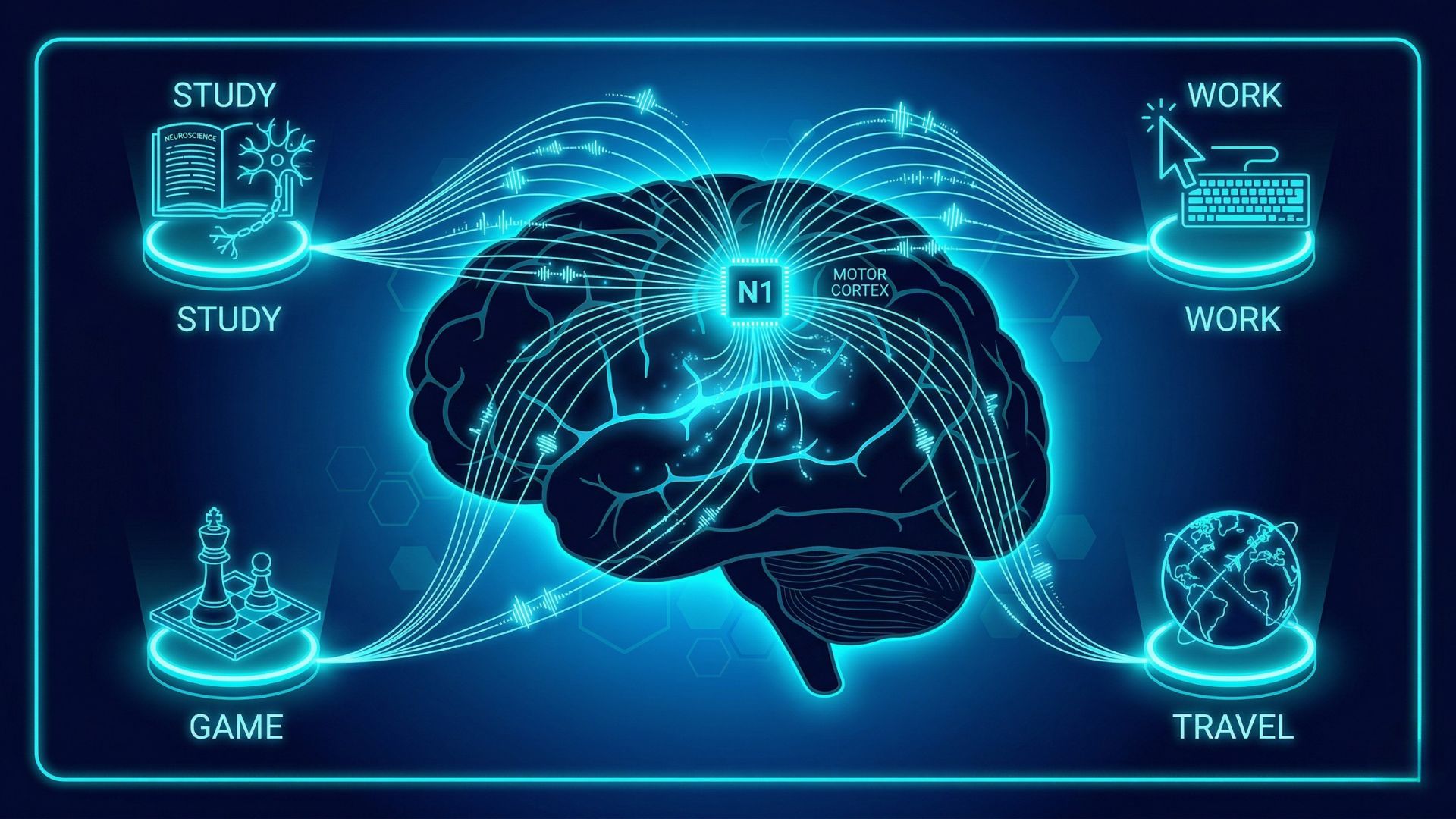
The First Mind Online
The strange, contested history of the first artificial minds — and what they tell us about intelligence itself.

Can AI Save the Planet?
AI is the most powerful scientific tool ever built. Can it be pointed at Earth's biggest problem fast enough to matter?

The Living Computer
Researchers are growing neurons into computational circuits. The line between biological and digital intelligence is dissolving.
 Buy me a coffee