Rise of the Humanoids
Boston Dynamics Atlas is assembling Hyundais in Georgia. Neura Robotics just raised hundreds of millions backed by Amazon and Nvidia. A humanoid robot now costs $16,000 — less than a used car. In 2026, the $55 billion bet on robots finally cashed in.
On a production line in Montgomery County, Georgia, a six-foot humanoid robot named Atlas is assembling Hyundai automobiles. Not as a demonstration. Not in a controlled research environment. In a factory, at scale, alongside human workers — doing the physical tasks that were, until very recently, the exclusive province of human hands and backs. The robot revolution didn't arrive with a manifesto. It arrived with a purchase order.
For decades, humanoid robots were a promise perpetually deferred. They could walk across a stage at trade shows, perform choreographed backflips for press conferences, and generate breathless coverage — but they couldn't reliably pick up a bolt, open a door, or survive contact with the messy unpredictability of real environments. That gap between lab and world was the defining problem of robotics. In 2026, the gap closed.
The evidence is now measured in deployment agreements, production contracts, and funding rounds that would have seemed impossible three years ago. The industry has raised $55.8 billion so far in 2026 — nearly double the previous full-year record — as investors race to back what many are calling the most significant technology transition since the smartphone. Whether they're right, and whether it happens on the timeline they're betting on, depends on a set of technical and economic questions that are only beginning to be answered.
From Showcase to Shop Floor
The shift from demonstration to deployment happened fast enough that it caught even industry observers off guard. Boston Dynamics' Atlas — the robot that became famous for its acrobatic videos — is now in production use at Hyundai's Metaplant in Georgia. The version at Hyundai has 56 degrees of freedom, which means its joints can move in 56 independent ways, giving it the fine motor capability needed for manufacturing tasks that require dexterity, not just strength.
BMW is further along than most realize. Figure AI's humanoid robots are actively on BMW production lines, having contributed to the assembly of more than 30,000 BMW X3 vehicles with component placement accuracy above 99%. This is not a pilot — it is operational manufacturing at commercial scale. British AI robotics company Humanoid signed a binding deployment agreement with Schaeffler targeting up to 2,000 wheeled humanoid robots, the largest single deployment contract in the industry's history.
Japan Airlines is testing humanoid robots at Haneda Airport for baggage handling, ground transport, and cabin cleaning — expanding the deployment case beyond manufacturing into service industries where labor shortages are acute and the physical environment is highly variable.
The $400 Million Bet on Robot Foundation Models
The most consequential development of the past month may not be a specific robot deployment but a funding round with a particular thesis attached. Generalist AI, a startup developing what it calls "foundation models for robotics," raised $400 million in June to accelerate what its founders describe as "physical AGI." The language is intentional. The argument is that what the transformer did for language — create a single, general-purpose architecture that could be fine-tuned for essentially any text task — a robot foundation model could do for the physical world.
NVIDIA, whose commercial interests in robotics infrastructure are substantial, has thrown its support behind this thesis with the Isaac GR00T platform: an open reference design for humanoid robots that pairs Unitree hardware with NVIDIA's sensing, actuation, and AI inference stack. The goal is to give robotics developers the same kind of standardized platform that Android gave mobile app developers — a common foundation from which to build specialized applications.
"What's happening in robotics right now is what happened in language AI in 2017. We're building the transformers for the physical world — and whoever gets there first sets the standard for the next decade."— Generalist AI investor briefing materials, June 2026
Whether this analogy holds depends on a hard technical question: is physical manipulation learnable from a single foundation model, or does the diversity of physical tasks require a fundamentally different approach? Language has deep structure — grammar, semantics, pragmatics — that a single architecture can capture. The physical world has no such universal grammar. A robot that masters BMW assembly lines may need to be substantially retrained to handle airport baggage, and even more so to help an elderly person in their home.
The Price Floor Breaks
Perhaps the most underappreciated development is the collapse of the price barrier. For most of robotics history, capable humanoid systems cost hundreds of thousands of dollars — appropriate for industrial automation in high-margin businesses but completely inaccessible to the broader market. Unitree Robotics' G1 changed the arithmetic. At $16,000 — roughly the cost of a used car — the G1 is a 130-centimeter humanoid capable of a standing jump of 1.4 meters and a growing library of manipulation skills. It is not at Atlas-level capability. But it is close enough to matter, and it is shipping today.
This price point changes who can deploy robots. Not just automotive manufacturers with billion-dollar production lines, but restaurants, hospitals, hotels, warehouses, and eventually individual consumers. The trajectory is familiar from other hardware categories: early capability at high cost, rapid commoditization, eventual ubiquity. Smartphones followed this curve. Solar panels followed it. There is significant reason to believe humanoid robots are now on the same curve.
Neura Robotics, backed by Amazon, NVIDIA, and others in a major funding round announced June 10, is pursuing a different wedge: wheeled humanoid robots optimized for logistics and last-mile delivery rather than factory manipulation. The bet is that the largest addressable market for robotics isn't manufacturing — it's the vast, underautomated world of warehousing, delivery, and service.
What Actually Has to Be True
The bull case on humanoid robots depends on a set of assumptions that are being tested right now, in real deployments. The first is generalization: can a robot trained on one task reliably learn another without extensive retraining? Factory robots today are highly task-specific. True general-purpose humanoids — ones that can handle the variety of physical situations a human worker encounters in a day — remain significantly harder than any current system.
The second is reliability. Industrial robots are expected to achieve "six sigma" reliability — fewer than 3.4 defects per million operations. Consumer robots may be held to lower standards, but still need to avoid mistakes that cost more than the robot's value. The 99%+ placement accuracy at BMW's Figure AI deployment is impressive; it also means roughly 300 errors across 30,000 vehicles. Whether that is acceptable depends on what those errors look like.
The third is safety around humans. A traditional industrial robot operates behind barriers, in carefully controlled spaces. Humanoid robots are being asked to work alongside people, in their homes, hospitals, and public spaces. The regulatory and insurance frameworks for this don't yet exist. The technical safety standards haven't been written. We are deploying before the rules are ready — which may be the only way to learn what the rules should be.
"2026 is the year robots crossed the line from research to revenue. The question now isn't whether humanoids will transform the economy. It's how fast — and who bears the cost of the transition."— KraneShares, Humanoid Robotics in 2026: The Race From Pilot to Platform
The robot revolution, in short, arrived on schedule — ahead of the infrastructure designed to absorb it. What comes next is not primarily an engineering question. It is an economic, regulatory, and social one. We have built the robots. Now we have to figure out what world we want to build around them.
Sources & Further Reading
- Robotics and Automation News. Generalist AI Raises $400 Million to Accelerate Development of Robot Foundation Models. June 5, 2026.
- CNBC. Humanoid Robotics Company Neura Robotics Backed by Amazon, Nvidia. June 10, 2026.
- KraneShares. Humanoid Robotics in 2026: The Race From Pilot to Platform. 2026.
- Memeburn. Physical AI Is Sending Humanoid Robots to Real Factory Floors in 2026. 2026.
- NVIDIA Blog. National Robotics Week — Latest Physical AI Research, Breakthroughs and Resources. 2026.
- Medium / A. Sarav. Humanoid Robots in 2026: Where the Industry Actually Stands. 2026.
- Loona Blog / Keyi Robot. Humanoid Robot Updates 2026: Latest News, Breakthroughs, and Industry Trends. 2026.
- Build Fast With AI. AI News Today — June 8, 2026: 16 Biggest Stories. June 8, 2026.
- Crescendo AI. Latest AI News and Breakthroughs That Matter Most. June 2026.
- Humanoid.press. Humanoid Robots News — AI Breakthroughs and Robotics Trends. June 2026.
- LLM Stats. LLM News Today — AI Model Releases, June 2026. 2026.

After the Transformer
Mamba-3 landed at ICLR 2026. The post-transformer era isn't coming — it's here, and it's faster and cheaper.

AI: The Engine of Discovery
How AI is accelerating scientific breakthroughs — and what it means that it's outpacing human-speed science.
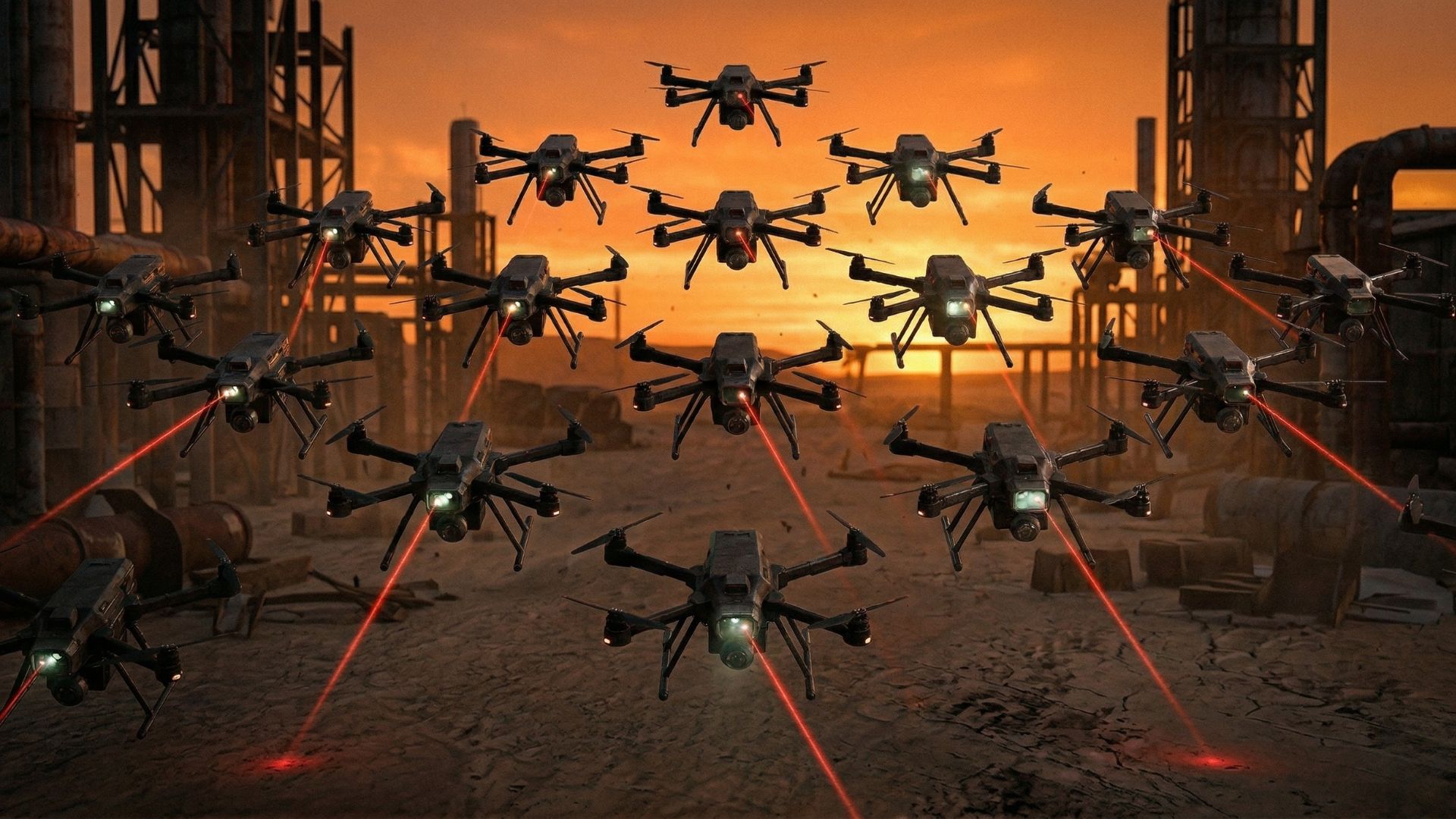
Autonomous Weapons
Lethal autonomous weapon systems are already deployed. The treaty to ban them doesn't exist. The debate is not theoretical.
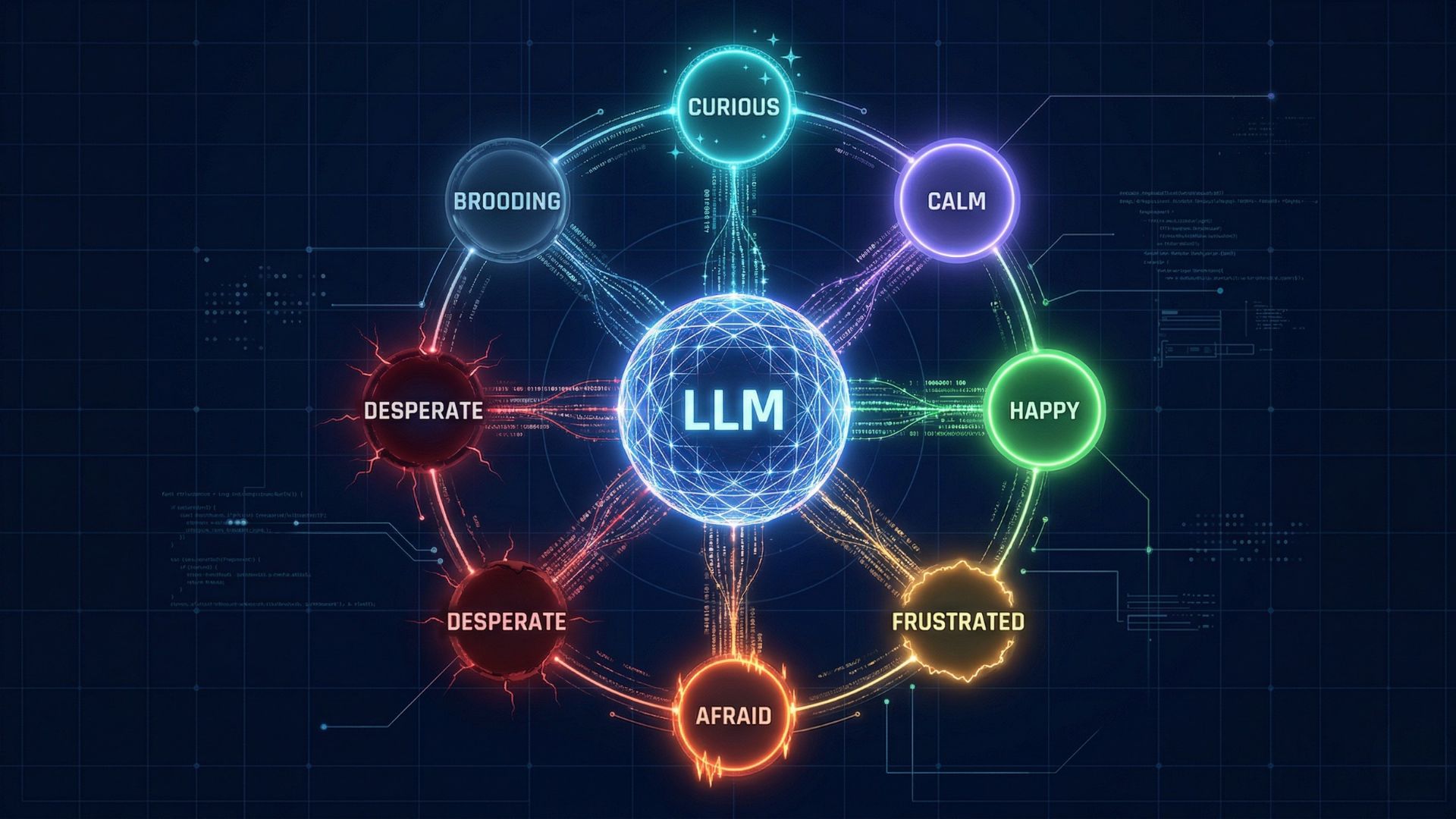
The Emotional Machine
Anthropic found 171 emotion concepts inside Claude. The same mechanism that boosts performance can be weaponized.

The Mirror Problem
When a mind sophisticated enough to model other minds turns that lens on itself, something philosophically strange happens.

Can AI Save the Planet?
AI is the most powerful scientific tool ever built. Can it be pointed at Earth's biggest problem fast enough to matter?
 Buy me a coffee