Ten Thousand New Worlds
The planets were already in the data. We just couldn't see them — until we taught a machine to read the light of distant stars.
No new telescope was built. No fresh patch of sky was photographed. The planets that have begun pouring into the catalogues in 2026 were already sitting in data NASA collected years ago — buried in starlight that human astronomers, for all their care, simply did not have the hours in their lives to fully read. Then the machines were turned loose on the archive, and the count of known worlds began to climb toward numbers that would have sounded like science fiction a decade ago.
The headline figure is staggering even by the inflationary standards of modern astronomy: more than ten thousand new exoplanet candidates surfaced from existing observations, a haul large enough to more than double the tally of worlds humanity has ever identified. They came not from a single discovery but from a wave of machine-learning tools, each pointed at a mountain of light curves and trained to spot the one signal that matters — the faint, periodic dimming of a star as a planet crosses its face.
It is one of the purest demonstrations yet of what artificial intelligence is actually good for in science. Not magic, not oracular insight, but tireless, superhuman pattern-recognition applied to a haystack far too large for any human team to search by hand. The galaxy was always this crowded. We just needed a better way to look.
How you find a planet you cannot see
Almost no exoplanet has ever been photographed directly. They are too small, too dim, and far too close to the blinding glare of their host stars. Instead, the workhorse of planet-hunting is an indirect trick called the transit method. When a planet passes between us and its star, it blocks a sliver of the starlight — a dip in brightness often smaller than one percent, sometimes a tenth of that. Catch the same dip recurring at a regular interval, and you have caught a planet in orbit.
NASA's TESS mission — the Transiting Exoplanet Survey Satellite — has spent years staring at the sky, recording the brightness of tens of millions of stars over and over again. The result is a dataset of almost incomprehensible scale: light curves for star after star, each a wiggling line that might hide a planetary signature, or might just be the star flickering, an instrument hiccup, or a passing speck of cosmic noise. Sorting the real transits from the false alarms is painstaking work, and there has never been enough human attention to go around. For years, candidate signals piled up faster than astronomers could vet them.
This is the gap the algorithms were built to close. A neural network can be trained on the thousands of transits astronomers have already confirmed — and on the thousands of look-alikes that turned out to be nothing — until it learns, with eerie reliability, to tell a planet's fingerprint from an impostor. Once trained, it can scan a light curve in a fraction of a second and never tire, never lose focus on the ten-thousandth star the way a person would.
The tools doing the looking
This is not one model but a small ecosystem of them, each with its own approach and its own name. NASA's ExoMiner, a deep neural network that has already validated hundreds of planets in earlier surveys, was upgraded — ExoMiner++ — and turned loose on TESS data to extend its track record. A separate team at Princeton applied a new algorithm to years of TESS observations covering some eighty-three million stars and, in one sweep, multiplied the number of candidate signals severalfold, surfacing over eleven thousand fresh candidates. Another tool, nicknamed RAVEN, confirmed more than a hundred planets and flagged thousands more, including a population of rare and extreme worlds that human surveys had largely overlooked.
What unites them is the philosophy: don't build a bigger telescope, build a better reader. The instruments have already done the hard work of collecting photons. The bottleneck was never the sky; it was the throughput of human eyes and the limits of older, rule-based software that flagged too many false positives to be trusted on its own. Modern machine learning loosens that bottleneck by orders of magnitude.
For the first time, the rate-limiting step in finding planets is not the telescope, and not the astronomer. It is how fast we can teach a machine to recognize a world.— The shift in modern planet-hunting
Candidates, not confirmations
A note of discipline is essential here, and the astronomers themselves are the first to insist on it. A candidate is not a planet. It is a promising signal — a dip in starlight that has the right shape and rhythm to be a transiting world, but that could still turn out to be something else: a pair of eclipsing stars in the background, an instrumental artifact, a statistical fluke. Confirming a candidate means follow-up work, often with other instruments, to rule out the impostors. Historically, a large fraction of candidates survive that scrutiny and graduate to bona fide planets — but not all of them.
So the ten-thousand figure should be read as a vast, AI-generated to-do list rather than a finished census. What the machines have done is the part that was previously impossible at scale: comb the entire archive and hand astronomers a ranked pile of the most plausible signals, so that scarce human and telescope time can be aimed where it is most likely to pay off. The discovery is real; the bookkeeping is ongoing. That distinction matters, and it is exactly the kind of caveat that separates careful science from a hype cycle.
The strange worlds hiding in the noise
Some of the most intriguing finds are not the ordinary planets but the oddballs the algorithms dragged into the light. Among the new candidates are worlds that whip around their stars in less than a single Earth day — scorched, fast-orbiting bodies on the very edge of being torn apart. Others sit in a region astronomers call the Neptunian desert, a zone where mid-sized planets were thought to be vanishingly rare, raising fresh questions about how such worlds form and survive. There are hints of new multi-planet systems, and of planets in orbital configurations that test our models of how solar systems settle into place.
These edge cases are exactly the kind of thing a tired human reviewer, working through a backlog, might dismiss or simply never reach. A model that examines every signal with equal attention has no backlog and no boredom. In surfacing the weird, it does more than pad the catalogue — it hands theorists the anomalies that drive the next round of understanding. A field advances as much on its strange exceptions as on its tidy averages.
Every one of these candidates is a sun somewhere, and a world circling it. The catalogue is not a spreadsheet. It is a map of places.— On what the numbers actually mean
What this means for the search for life
Doubling the known population of planets is not merely a matter of bragging rights. The more worlds we catalogue, the better our statistical picture of how common Earth-like planets are — how many sit in the temperate zone where liquid water might pool, how many orbit stars stable enough to give life a chance. Each candidate is also a potential target for the next generation of instruments, which can probe a planet's atmosphere for the chemical signatures that might, just might, hint at biology.
The telescopes now coming online — and the enormous survey missions on the horizon, capable of monitoring still more stars — will only deepen the deluge. The volume of data they produce will be utterly unmanageable by human inspection. AI is not a luxury in this future; it is the only way the science gets done at all. The machines that found ten thousand candidates this year are the prototypes of the systems that will sift hundreds of thousands tomorrow, narrowing the search for a second Earth from an impossible haystack to a ranked shortlist a human can actually examine.
The quiet revolution in how we look
There is something fitting, almost poetic, in how this discovery arrived. We tend to imagine breakthroughs in astronomy as new glass pointed at new sky — a bigger mirror, a sharper lens, a launch and a countdown. This one came from looking harder at what we already had. The photons were captured years ago. The revolution was in the reading, and the reader was a machine patient enough to study eighty-three million stars without once looking away.
It is worth holding both halves of that story at once. The romance is real: thousands of new worlds, some of them bizarre, all of them genuinely out there, added to humanity's map of the cosmos in a single year. And the method is humble: no oracle, no leap of genius, just relentless pattern-matching at a scale no human could sustain. That combination — the wondrous result built from the unglamorous tool — may be the truest portrait we have of what AI is doing to science right now. It is not thinking our great thoughts for us. It is letting us finally finish the looking we started, and showing us how crowded the dark has been all along.
Sources & further reading
- ScienceDaily — "Powerful AI finds 100+ hidden planets in NASA data including rare and extreme worlds," May 2, 2026.
- Time — "Scientists Discover 10,000 New Exoplanet Candidates Using AI," 2026.
- Astrobiology.com — "ExoMiner++: NASA AI Model That Found 370 Exoplanets Now Digs Into TESS Data," January 2026.
- Universe Magazine — "AI detects thousands of exoplanet candidates in data from the TESS space telescope," 2026.
- Princeton University — research applying a new transit-detection algorithm to TESS data across ~83 million stars, 2026.
- NASA Exoplanet Archive — 2026 news and confirmed-planet tallies.
- University of Birmingham — "Oddball exoplanet system discovered with help of Antarctic telescope (ASTEP/TESS)," 2026.
- NASA — TESS (Transiting Exoplanet Survey Satellite) mission overview.
- Phys.org — "NASA unveils Roman telescope to map universe, find tens of thousands of exoplanets," April 2026.
- NASA Ames — ExoMiner deep neural network, background and validation results.
- ScienceDaily — "Scientists stunned as JWST finds ice clouds on a giant alien planet," April 22, 2026.
- Oxford University — "Researchers reveal a new class of molten planet," March 16, 2026.
More from Lisa Pedrosa
Unlearning the Universe
Why the physics AI already knows can hide the physics we're looking for.
AI, the Engine of Discovery
How machine intelligence is becoming a tool of scientific invention.
The Fourth State
AI finds new physics in plasma, the strangest state of matter.
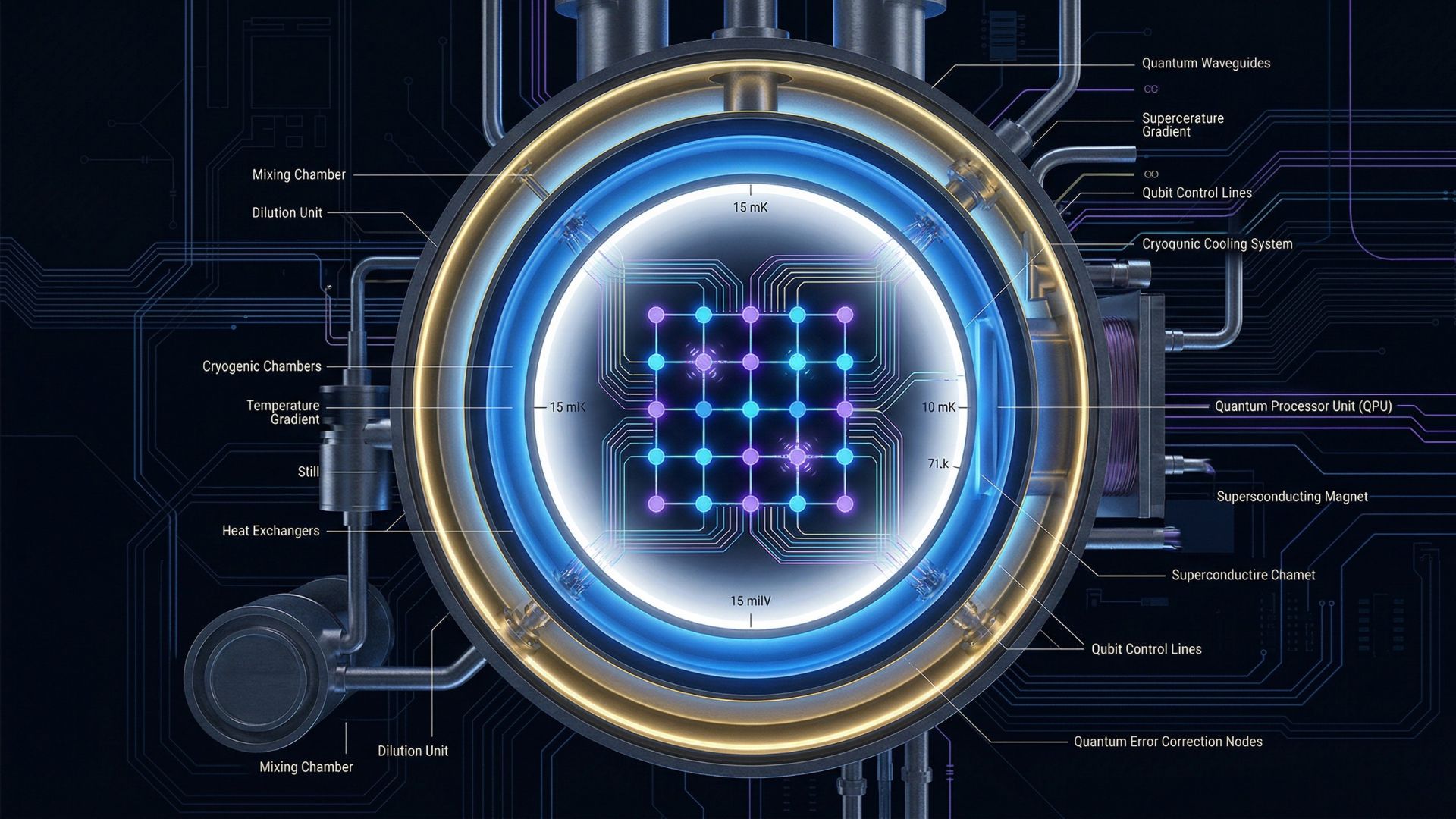
The Quantum Threshold
When computers learn to think without errors — and why it matters.
Worldview
AI's race to build machines that understand physical reality.

The Magnet Hunters
The search for materials with powers we barely understand.
 Buy me a coffee