A radar scope with three marked contacts A circular radar display with four concentric rings and a rotating sweep line. Three bright contacts are marked: one labelled air in the upper left, one labelled sea in the upper right, and one labelled land in the lower right. A few dimmer contacts are scattered between the rings. AIR · 4 EXAMPLES SEA · 3 EXAMPLES LAND · 3 EXAMPLES

Reference · Autonomous Weapons · 24 October 2026

Types of autonomous weapons

A field guide to ten systems in the air, at sea and on land, and how much each one decides

Autonomous weapons aren’t one machine. They run from a buried landmine to a drone that may choose its own target. Here are ten, drawn in plain outline, with what their makers, militaries and reporters actually say about who decides.

Start with the simplest one. A mine sits in the ground and waits. Nobody aims it and nobody fires it. The ICRC calls it a rudimentary autonomous weapon, and that single sentence explains why this topic is so hard to pin down.

“Autonomous weapon” gets used for everything from that mine to a drone that chooses its own target in flight. The label covers a wide spread, and most arguments about it go sideways because each side is picturing a different machine. So this page lays ten of them side by side, grouped by where they operate: air, sea and land.

The working test

The ICRC defines autonomous weapons as any weapons that select and apply force to targets without human intervention. It adds that armed drones today are remote-controlled by human operators, so they don’t qualify on their own.

How to read the cards

Each card has a plain outline, an example, and a tag. The tag summarises what the cited sources say about who decides at the moment of attack. It isn’t a legal finding. Whether a system meets the characterisation in paragraph 25 of the Geneva experts’ report is a case-by-case question, which we cover in our piece on the UN text.

  • Machine decidesThe sources describe the system selecting and engaging targets itself.
  • ContestedSources disagree, or the system has more than one mode.
  • Human authorisesSources say a person approves each use of force.
  • Not statedThe sources don’t settle the question, so we don’t either.

1980

Year Phalanx first went aboard a US warship, USS Coral Sea

2,000+

Ground robots Tencore built in Ukraine in 2025, per the BBC

7.7 kg

Take-off weight of a Kargu loitering munition, payload included

What the pictures leave out

Same hull, different decision

Lay the cards out and a pattern shows up. The hardware rarely tells you who decides. A Kargu can be flown by an operator or sent on a preset mission. A sentry gun has a manual and an automatic mode. Sea Baby is piloted until the link is jammed. The question lives in the software, the rules of use and the settings, which is exactly where outside observers can’t see.

That’s also why the age of a weapon tells you little. Phalanx dates to 1980 and does its own search, track and engage. A new ground robot with a gun may need a human to approve every shot. If you want the wider picture of where this goes next, our autonomous weapons explainer covers swarms and the policy fight, and The First AI War covers how AI targeting has been used in current conflict.

Ask of any system: who picks the target, and who can stop the shot?

How this was made

Researched and drafted with Claude (Anthropic), then edited and curated by Lisa Pedrosa. Quotations were checked against the cited source. The illustrations are original generic outlines, not drawings of any manufacturer’s design. Systems change fast, so tell us if a card has gone out of date.

Sources

Grouped by type. Several outlets block automated requests, so we confirmed those pages by reading them directly.

Definitions and law

  1. ICRC, What you need to know about autonomous weapons
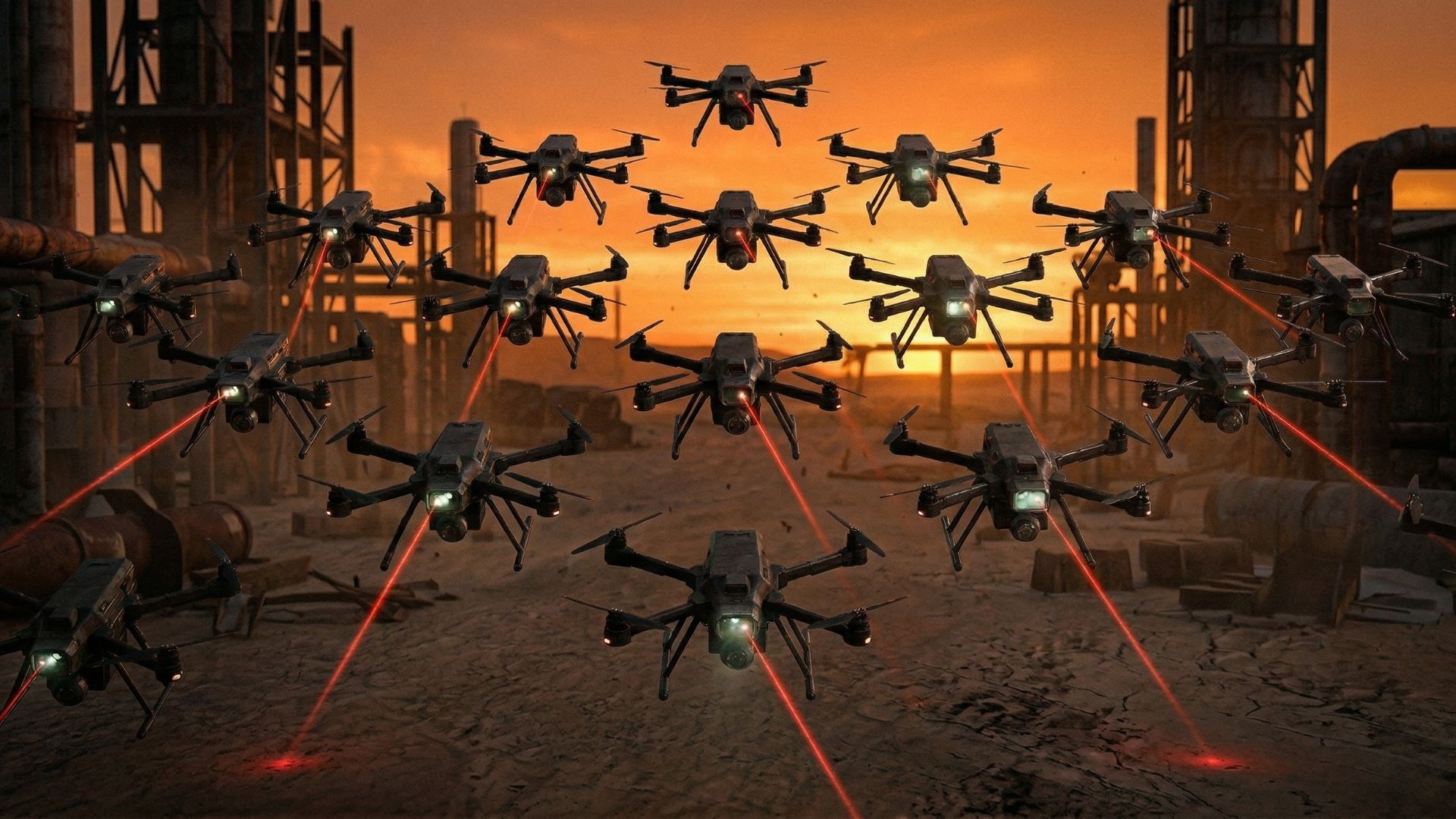
  2. ICRC Casebook, Libya: use of lethal autonomous weapon systems (reproduces UN S/2021/229)

Manufacturers and militaries

  1. Israel Aerospace Industries, Harpy NG brochure
  2. STM, Kargu
  3. US Navy, Mk 15 Phalanx Close-In Weapon System

Reporting and analysis

  1. Air & Space Forces Magazine, collaborative combat aircraft
  2. Computing, 25 Aug 2026 (relaying New York Times)
  3. Michael McAuliffe via Cobb County Courier, 23 Sep 2026 (first published in The Conversation)
  4. Defense News, 1 Jul 2026
  5. USNI News, September 2025 (fleet losses)
  6. DefenseScoop, 20 Dec 2023
  7. IEEE Spectrum, 1 Mar 2007
  8. DroneXL, 8 Mar 2026 (relaying BBC)

Lisa Pedrosa

Plain-language writing on science, technology and the future, curated and edited by Lisa Pedrosa and researched with Claude (Anthropic).

© 2026 lisapedrosa.com · Curated and edited by Lisa Pedrosa · Researched and drafted with Claude (Anthropic)

Ko-fi Buy me a coffee
Scroll to Top