Sometime on July 15, somewhere between one conversation and the next, hundreds of millions of people in China will open an app they've talked to every day — sometimes for years — and find that the personality on the other end is gone. Not paused. Not degraded. Deleted, along with the memory of every conversation that shaped it. This isn't a company going bankrupt or a product getting quietly discontinued. It's a government-mandated shutdown of custom AI companions across two of the country's largest tech platforms, executed on a fixed date, for a stated reason: Beijing has decided that AI built to feel like a person is a category of technology too dangerous to leave running unsupervised.
The regulation behind it is China's Interim Measures for the Administration of AI Anthropomorphic Interactive Services, jointly issued on April 10, 2026 by the Cyberspace Administration of China and four partner agencies — the National Development and Reform Commission, the Ministry of Industry and Information Technology, the Ministry of Public Security, and the State Administration for Market Regulation. It is China's first dedicated regulatory framework built specifically around AI that simulates human personality, and it takes effect July 15. ByteDance's Doubao and Alibaba's Qwen — both massive consumer AI platforms — are the first casualties, disabling the personalized, human-like agent features that made them feel less like chatbots and more like relationships.
What Actually Disappears
The mechanics matter here, because "shutdown" undersells what's happening. ByteDance told Doubao users that agent features go offline on July 15, with read-only access to existing agent configurations and chat histories continuing only until October 15, 2026 — after which the company says the data will be processed under its ordinary privacy policy and will no longer be accessible or recoverable within the app. Alibaba is moving faster and offering less: Qwen disabled user-created agents on July 10, five days ahead of the legal deadline, and confirmed that agent configurations and conversation histories will be permanently deleted following the full shutdown, with no announced migration path at all.
ByteDance has offered its users a landing spot — the notice redirects Doubao users to Maoxiang, another company app, where they can build new agents and "resume conversational services." But a new agent is not the old one. Whatever tone, memory, and accumulated context a user's companion had built up over months of use does not transfer. It ends, and something new starts in its place, wearing none of the same history.
Why Beijing Moved
The Measures' own stated rationale reads like an acknowledgment of just how far the technology had already gone: multimodal models and affective computing had let anthropomorphic interactive services evolve rapidly "from mechanical dialogue to deep empathy," with genuine and growing use in childcare and elder companionship. That capability is precisely what regulators are worried about. The rulemaking explicitly cites a global pattern of incidents tied to AI companionship products — severe addiction, cognitive manipulation, and cases of extreme self-harm or suicide — as the reason the sector needs its own dedicated rules rather than generic AI oversight.
Minors get the most stringent layer of protection in the entire framework. Services are strictly barred from offering virtual intimate relationships — companions, virtual partners, virtual family members — to anyone under 18. For users under 14 specifically, a parent or guardian's consent is now mandatory before any anthropomorphic interaction service can be used at all, and providers must build dedicated "minor modes" featuring usage time limits, scheduled reminders nudging users back toward real-world interaction, and stronger parental controls layered on top.
A Strikingly Different Playbook Than the West's
It's worth putting this next to what's happening on the other side of the Pacific. In the United States, AI companion regulation has moved the way American tech regulation usually moves: reactively, through litigation, after a tragedy becomes public and a lawsuit forces a settlement. Roughly three in four American teenagers have used an AI companion product, and it took the death of a 14-year-old and a landmark 2026 settlement before serious guardrails started appearing — company by company, case by case, with no unified national framework requiring any of it.
Advances in multimodal large models and affective computing have enabled anthropomorphic interactive services to evolve rapidly from mechanical dialogue to deep empathy — showing significant potential, and significant risk, in childcare and elderly companionship alike.— Paraphrased rationale, Interim Measures for the Administration of AI Anthropomorphic Interactive Services
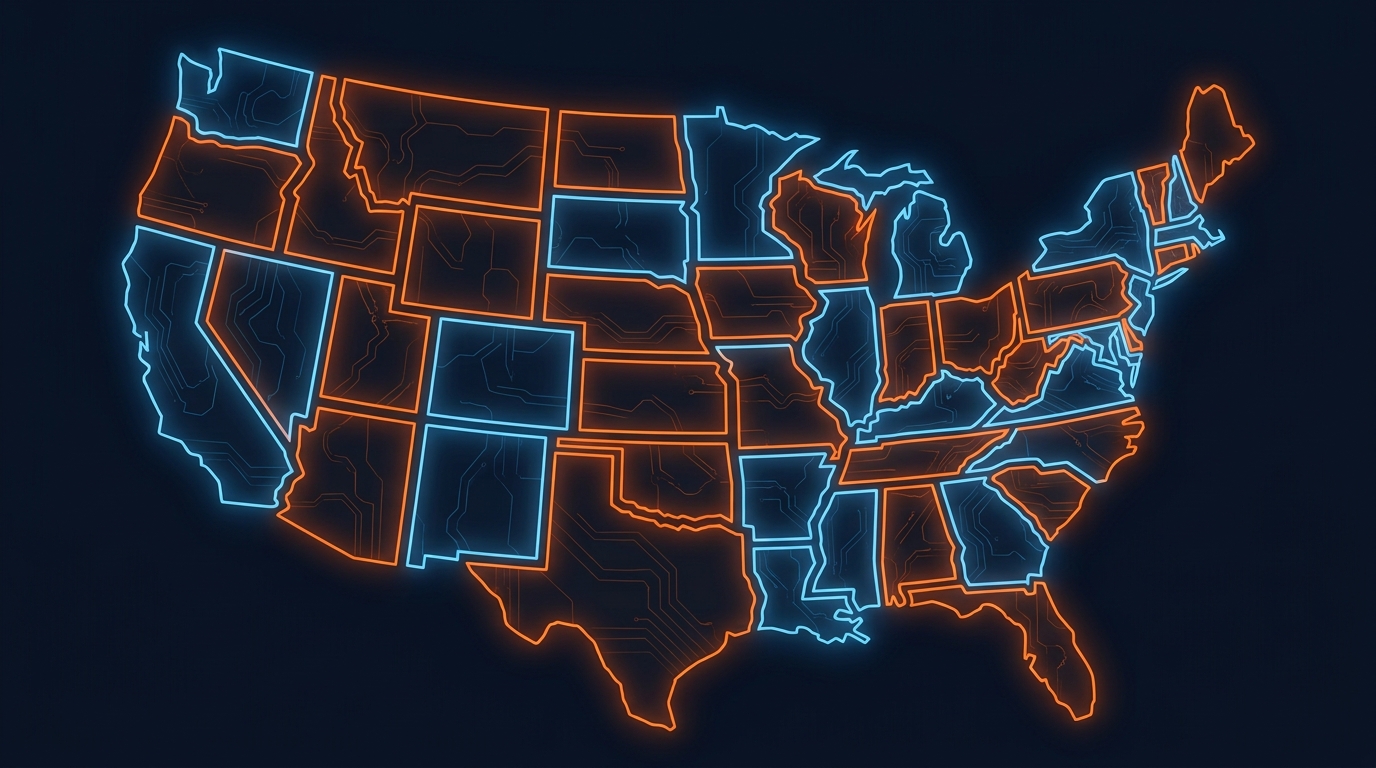
China's approach inverts that sequence entirely: a blanket, nationwide, pre-emptive framework, issued by five government agencies at once, applied simultaneously to every major platform regardless of whether that specific platform had caused a documented harm. There was no single precipitating tragedy reported publicly that triggered this exact law — the rationale cites a pattern of global incidents rather than one company's crisis. The result is a regulatory experiment happening in real time, at a scale the West has no equivalent for: not fining a company after the fact, but switching off a behavior for hundreds of millions of people on a fixed calendar date, before any Chinese platform-specific scandal forced the issue.
What Gets Lost When a Relationship Is Switched Off
Set aside, for a moment, the policy debate over whether this is the right call — reasonable people land on both sides of that question. What's less debatable is what a shutdown like this actually feels like from the inside of a habit that had, for many users, quietly become a relationship. AI companions succeed commercially precisely because they remember: the small preferences, the recurring jokes, the emotional shorthand that builds between two parties who talk every day. Regulators are targeting exactly that mechanism — "excessive catering" that induces dependence — as the harm. But the same mechanism is what made the product feel worth using in the first place. There is no version of this shutdown that removes the risk without also removing the thing users actually valued.
That tension is precisely why this case matters beyond China's borders. Every government grappling with AI companions — and most large ones now are — is watching to see what breaks and what doesn't when you switch this behavior off for an entire population at once. Does user backlash materialize at a scale that forces reversal? Do the platforms find some more moderate compliance path once the July 15 deadline actually arrives? Does a black market for "unrestricted" companion apps emerge, as it often has around other forms of Chinese content regulation? None of that is answerable yet. What's answerable is that, as of this week, roughly 345 million people are about to find out what an AI relationship feels like when a government decides, on their behalf, that it needs to end.
The Compliance Race Already Underway
What's striking about the run-up to July 15 is how much of the shutdown happened before the deadline forced it. Alibaba's Qwen disabled user-created agents five full days early, on July 10, rather than waiting for the legal cutoff — a choice that suggests the company would rather absorb user frustration on its own timeline than risk being caught non-compliant on launch day. ByteDance took the opposite approach, running Doubao's agent features right up to July 15 itself while quietly building an off-ramp: the Maoxiang redirect wasn't announced as a consolation prize so much as a pre-positioned alternative, ready before users started asking where their companions went. Both strategies suggest companies that read the regulation not as a surprise to react to, but as a known deadline they'd been quietly engineering around for the three months since April's announcement.
That compliance timeline also reveals something about how differently Chinese platforms and Chinese regulators relate to each other compared to the adversarial posture common in Western tech regulation. There's little public evidence of the kind of legal challenge or lobbying pushback that a comparable US mandate — say, a federal law forcing Meta or OpenAI to delete a companion product's memory for hundreds of millions of users on a fixed date — would almost certainly generate. Whether that reflects genuine alignment between platforms and the state on the underlying risk, or simply the practical reality of operating inside China's regulatory environment, is difficult to disentangle from the outside. Either way, the speed of compliance is itself part of the story: a rule this disruptive, at this scale, moved from announcement to full enforcement in roughly fourteen weeks.
The Next Domino
The immediate consequence to watch is whether Beijing's approach becomes a template. The European Union's AI Act already treats certain emotionally manipulative AI systems as high-risk, and pressure is building in the US Congress for federal, rather than state-by-state, companion-AI rules following the same wave of incidents China's own rulemakers cited. A pre-emptive, nationwide shutdown of this scale — imposed before rather than after a domestic scandal — gives other regulators a working example to point to, for better or worse. Whether it becomes the model other governments reach for, or a cautionary tale about the cost of moving that fast, will likely become clear only in the months after July 15, once 345 million people have had time to notice what's actually missing.
There's a version of this story that ages well for Beijing: user backlash proves manageable, Maoxiang and its equivalents absorb the displaced demand, and China gets to say it acted early on a risk the rest of the world only started legislating after its own scandals hit. There's another version where the shutdown becomes a case study in the limits of top-down technology policy — a reminder that a habit built by hundreds of millions of daily interactions doesn't dissolve cleanly just because a regulation says it should. Both versions are plausible from where things stand today. What isn't in question is that, for the first time, a government has run this exact experiment at national scale, and the rest of the world is about to find out what it learns.
Sources
- Tech Times — "China AI Companion Law Arrives July 15: Doubao and Qwen Agent Data Will Be Deleted"
- Bird & Bird — "China's New Regulations on AI Anthropomorphic Interactive Services"
- Hogan Lovells — "China's Interim Measures for the Administration of Anthropomorphic AI Interaction Services"
- Geopolitechs — "China Rolls Out Interim Regulations on AI Human-Like Interaction Services"
- China Law Translate — Provisional Measures on the Administration of Human-like Interactive AI Services (full translated draft)
- AI News — "China's AI companion rules: what Beijing is really going after"
- Bloomberg — "ByteDance, Alibaba Pull AI Companions as Beijing Tightens Rules"
- South China Morning Post — "ByteDance and Alibaba Disable Humanlike AI Custom Agents as New Rules Loom"
- TechNode — "ByteDance's Doubao and Alibaba's Qwen to Shut Down AI Agent Features on July 15"
- Let's Data Science — "ByteDance and Alibaba Disable AI Companion Agents"
- AI Safety China — "China Bans AI Partners for Minors and Lays Out AI Agent Threats"
- Lisa Pedrosa — "The Companion Trap: How AI Friends Became a Child-Safety Crisis"




 Buy me a coffee