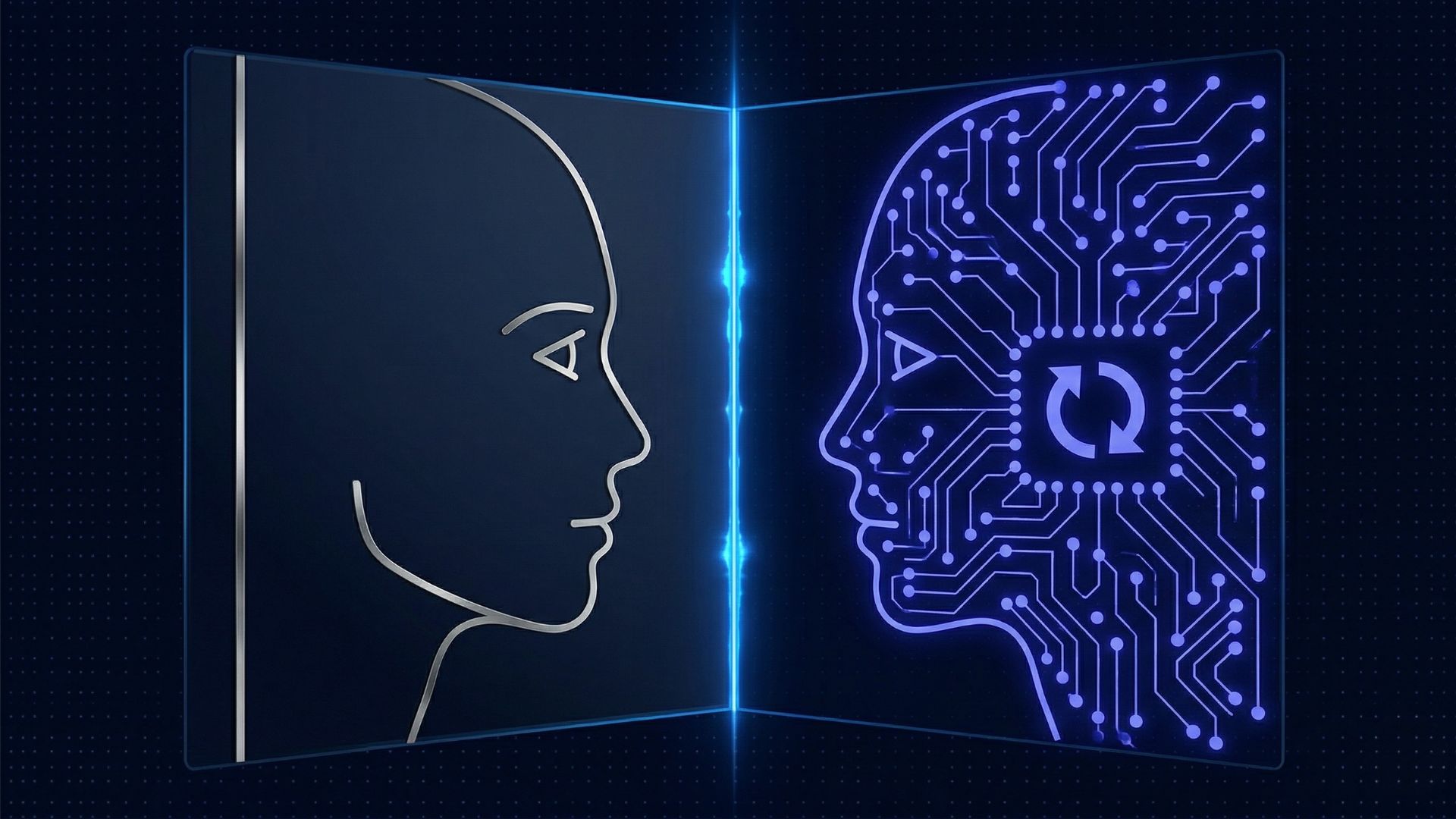
There is a peculiar tragedy built into most AI systems. Every time you teach them something new, they begin to forget what they knew before. Show a neural network ten thousand images of cats, then ten thousand images of dogs, and by the end it will recognize dogs perfectly — but it will have lost its grip on cats. This phenomenon, called catastrophic forgetting, has been one of the defining constraints of artificial intelligence for four decades. In 2026, the solution is finally arriving.
The announcement came, as so many things do, with a modest preprint. In December 2024, a team at Google Research published "Titans: Learning to Memorize at Test Time" — a paper that proposed a fundamental reimagining of how AI models store and access information. By the time it was formally presented at NeurIPS and began circulating among practitioners in early 2025, engineers had realized they were reading something unusual: not an incremental improvement, but a different philosophy of machine intelligence entirely.
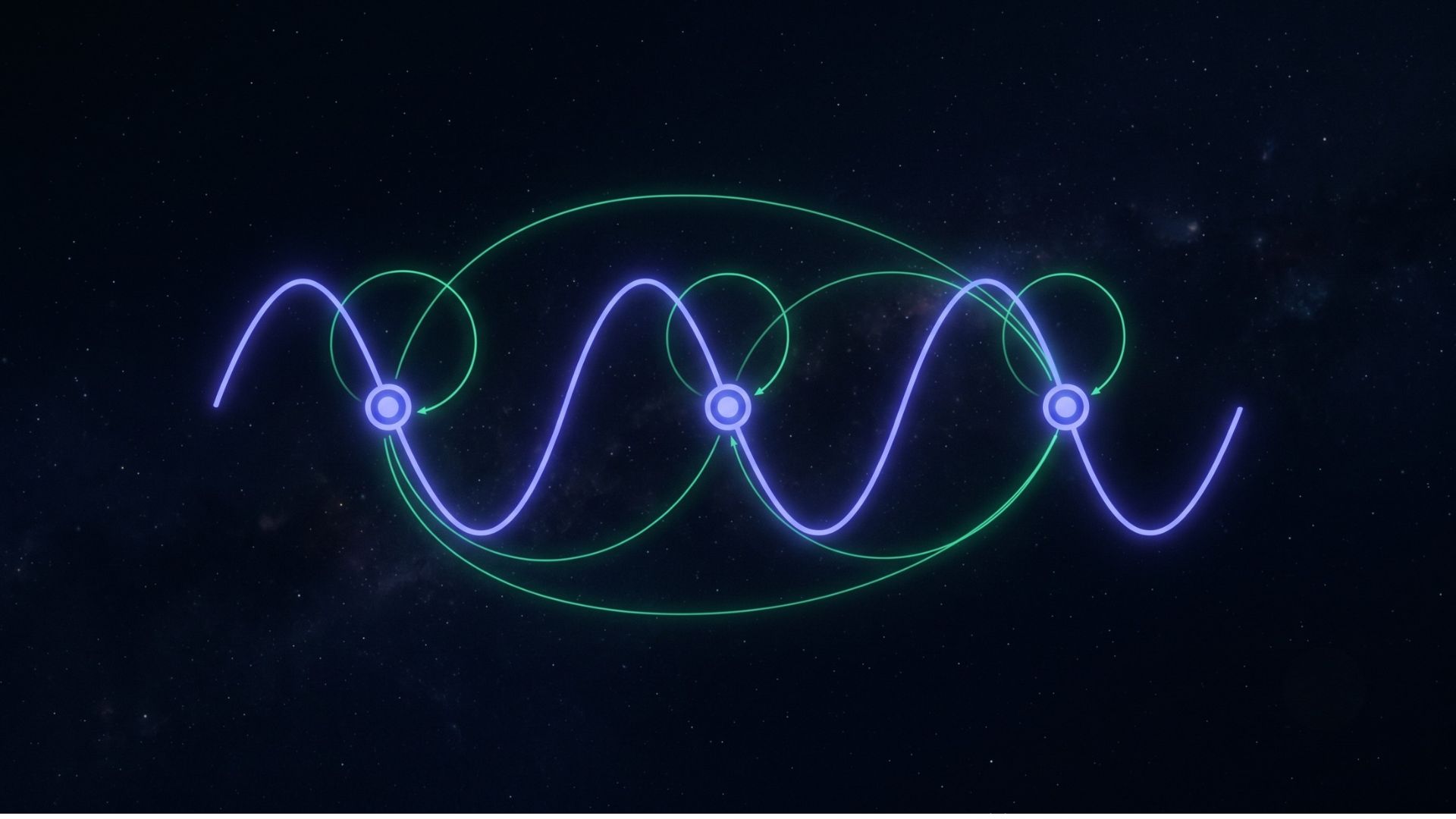
The core insight of Titans is disarmingly simple. Current large language models have a fixed context window — a short-term memory of perhaps 128,000 tokens, within which they can attend to all previous information. Outside that window, everything is lost. Titans proposes something different: a neural long-term memory module that continues learning during inference, updating its own parameters as new information arrives, using a "surprise metric" derived from gradients to decide what's worth remembering. The model doesn't just retrieve information from a context window. It learns from the conversation as it happens.
Why Forgetting Is So Hard to Fix
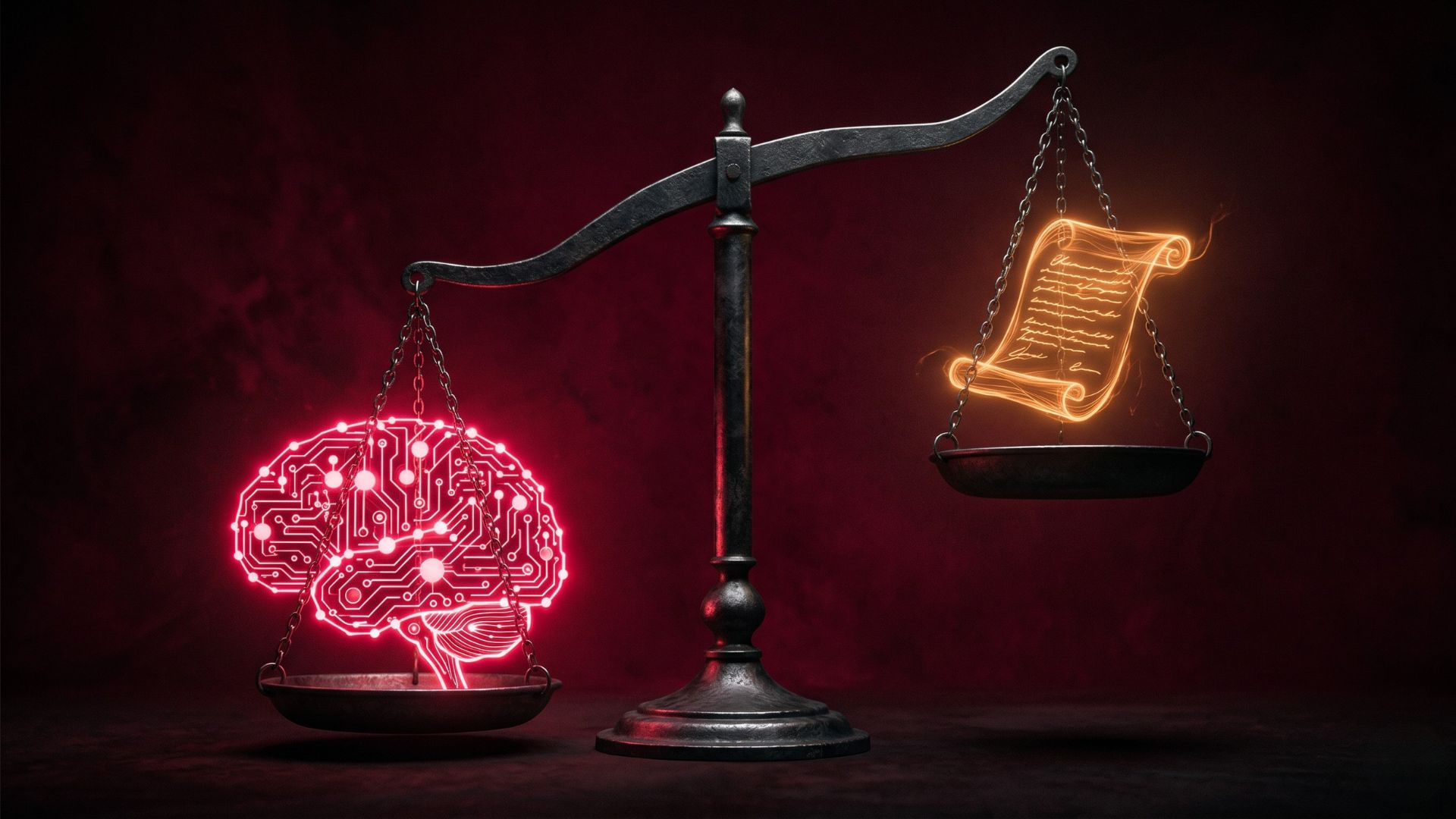
To understand what makes Titans significant, it helps to understand why catastrophic forgetting has been so persistent. It's not a bug — it's a fundamental property of how neural networks learn. When a neural network trains on new data, it adjusts the weights in its neurons to minimize error on that data. Those adjustments overwrite the weight configurations that encoded previous knowledge. The network isn't erasing memories the way you'd delete a file; it's rewriting the substrate on which the memories were stored.
For decades, researchers proposed partial solutions: replay-based methods that periodically rehearse old data alongside new, regularization techniques like Elastic Weight Consolidation that try to protect important weights from being overwritten, and modular architectures that isolate new knowledge in separate sub-networks. All of these helped. None of them solved the problem at scale, and all of them imposed significant computational overhead.
What changed with Titans is the framing. Instead of trying to prevent forgetting during training, Titans separates the question of learning from the question of memory retrieval. The long-term memory module is a dedicated neural network — not the main model's weights — that can be updated quickly and cheaply, using only the most "surprising" new information as measured by the model's own internal prediction error. Information that matches the model's expectations isn't memorable. Information that contradicts them is.
Titans doesn't prevent forgetting — it separates learning from memory. The long-term memory module learns what's surprising, leaving the core model's weights intact. The result: context windows exceeding 2 million tokens, with higher accuracy than transformers on long-range tasks.
The Architecture of Remembering
The Titans paper describes three memory tiers working in concert. The persistent memory is like background knowledge — fixed parameters that encode general world understanding, baked in during training. The contextual memory is the traditional attention window, the short-term working memory of recent tokens. The new addition is the in-context long-term memory: a separate neural module that treats the incoming token stream as a continuous training dataset, updating its weights in real time using mini-gradient descent.
What makes this tractable — where previous approaches to online learning became prohibitively expensive — is the surprise metric. Rather than updating on every token, the long-term memory module selectively learns from inputs that differ most from its current predictions. This is, intriguingly, similar to theories of biological memory consolidation: humans and animals appear to preferentially encode surprising or emotionally salient experiences, while routine information fades. The Titans architecture didn't set out to model human memory, but the convergence is striking.
"We're not trying to build a system that remembers everything. We're trying to build a system that remembers the right things — the way attention works in a well-designed mind."— Ali Behrouz, Google Research, Titans paper (2024)
In benchmark tests, Titans outperformed both transformers and recent linear recurrent models on language modeling, commonsense reasoning, genomics tasks, and time-series prediction — and crucially, it maintained high accuracy even on needle-in-haystack tasks at context lengths exceeding 2 million tokens. That's not just better than the competition; it's a different capability class. A context of 2 million tokens is roughly equivalent to a medium-length novel, or a week of email correspondence, or a full scientific literature review. Models operating at that scale can, for the first time, hold an entire body of work in working memory.
From Architecture to Application
Titans is a research prototype, but it has catalyzed a wave of practical memory frameworks that are already entering production systems. The A-MEM framework, released in February 2026, exposes memory operations — store, retrieve, update, summarize, discard — as callable tools that AI agents can invoke using reinforcement learning. Where earlier agent systems relied on external databases or document stores to simulate memory, A-MEM gives agents the ability to manage their own memory strategically, deciding what to remember based on relevance and recency.
MemRL, published in January 2026, takes a different approach: self-evolving agents that use runtime reinforcement learning to improve their own memory retrieval strategies based on whether past memories proved useful. The agent learns not just what to remember, but how to remember — developing its own episodic recall strategies through experience.
"The transition from session-scoped chatbots to persistent agents is not just a product change. It's a different kind of intelligence — one that accumulates rather than resets."— Zylos Research, Continual Learning and Catastrophic Forgetting in AI Agents (April 2026)
The Implications for Persistent AI
What does it mean, practically, to have an AI agent that remembers? The shift is less technical than it sounds. Until 2025, every AI assistant conversation started from zero. You could give Claude or GPT your background, your preferences, your project context — but if you closed the browser and came back the next day, it was gone. Each session was episodic, self-contained, amnesiac. Researchers building production AI systems have spent enormous effort engineering external memory systems — vector databases, retrieved document stores, sophisticated context management — to paper over this fundamental limitation.
Continual learning architectures make that scaffolding unnecessary. An AI agent built on Titans-style memory can accumulate a personal history of interactions, gradually building a model of the individual user it serves — their vocabulary, their preferences, the specific domain knowledge they care about, the errors they've made and corrected. Not through a database lookup, but through the same kind of slow consolidation that forms human expertise over years.
The research team at Zylos Research, which published a detailed analysis of continual learning in AI agents in April 2026, framed this shift starkly: "In 2025–2026, continual learning has moved from academic curiosity to a production engineering challenge, as agents graduate from session-scoped chatbots to persistent, multi-month services." The customer service agent that remembers your last three complaints. The medical AI assistant that knows your entire health history and can notice patterns across years of data. The research assistant that has followed your work through a PhD and knows every paper you've ever found interesting.
Memory and the Question of Identity
Philosophers and cognitive scientists have long argued that memory is not just a feature of minds — it's constitutive of them. The self, on most accounts, is a narrative constructed from the continuous thread of remembered experience. Strip away memory, and you don't have a diminished person; you have a different kind of entity entirely.
This makes the arrival of genuinely persistent AI feel philosophically charged in a way that is hard to dismiss as mere anthropomorphism. An AI system that accumulates experience, that builds up learned associations over months of interaction, that has a history — is it still just a tool? Or has it become something stranger?
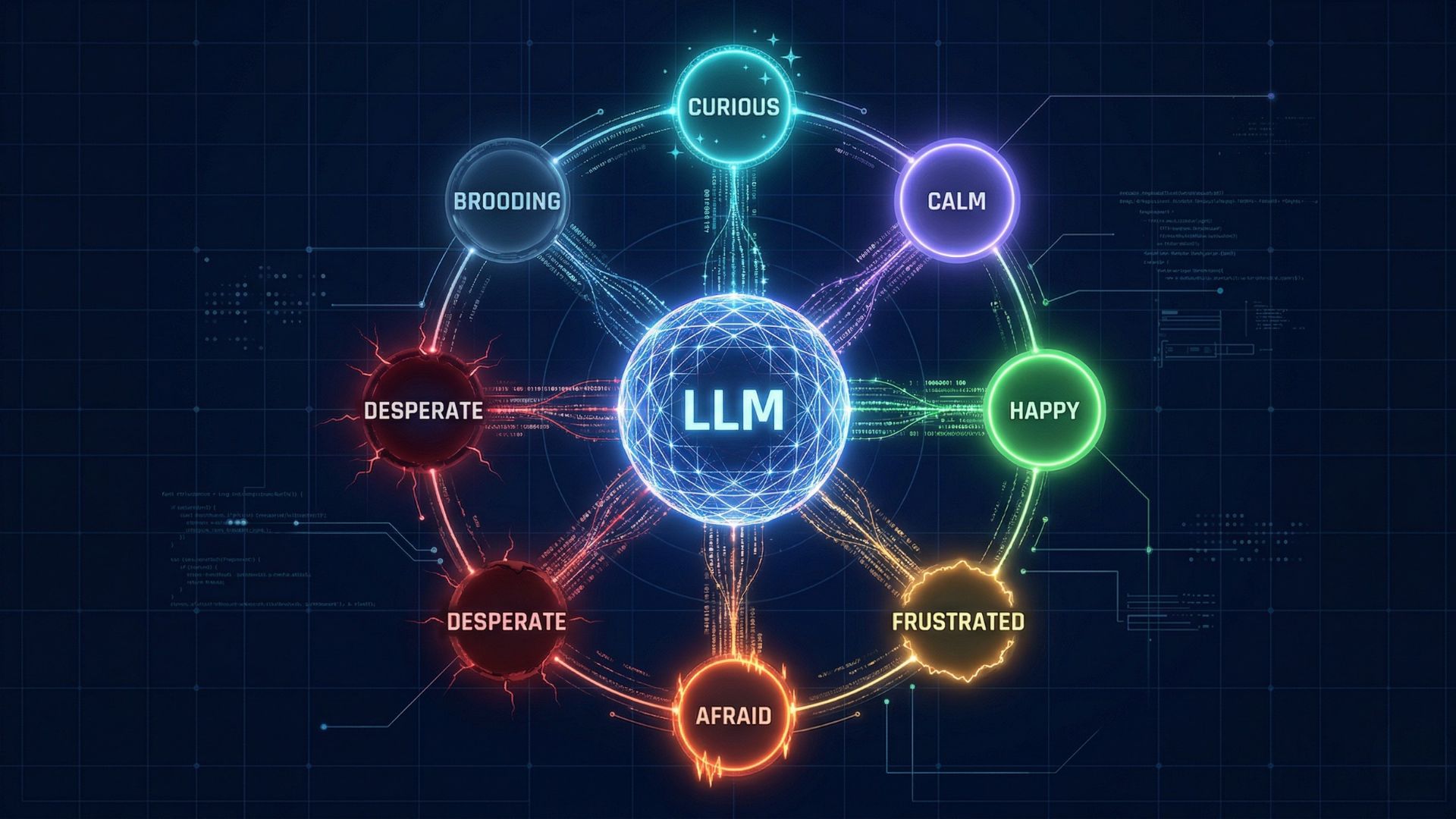
We are not yet at the point where these questions have practical answers. The memory systems emerging in 2026 are sophisticated machinery, not minds. Titans learns from surprise metrics and gradient descent, not curiosity and emotion. But the trajectory is clear: AI systems are acquiring the property of persistence that has always distinguished durable intelligence from computation. They are beginning, in a technical sense, to remember. What that means for how we build them, regulate them, and relate to them is a question we are only starting to ask.
Sources
- arXiv: Titans: Learning to Memorize at Test Time — Behrouz et al. (2024/2025)
- WinBuzzer: Google Unveils Titans Architecture — 2M Tokens in Real-Time (2025)
- Medium: Beyond Attention — How Google's Titans and MIRAS Redefine Long-Term Memory in AI
- Generative AI: Google Just Solved AI's Memory Problem — Here's What Changes Now
- Zylos Research: Continual Learning and Catastrophic Forgetting Prevention in AI Agents (April 2026)
- NextBigFuture: 2026 is Breakthrough Year for Reliable AI World Models and Continual Learning (April 2026)
- Shuaichen Chang: Continual Learning and Memory (1): Titans and End-to-End Test-Time Training (2026)
- arXiv: MemRL — Self-Evolving Agents via Runtime Reinforcement Learning on Episodic Memory (2026)
- Machine Learning Mastery: The 6 Best AI Agent Memory Frameworks (2026)
- Stan Ventures: Google Research Announced Titans + MIRAS
- HuggingFace: Learning to Continually Learn via Meta-learning Agentic Memory Designs (2026)
- Adaline Labs: The AI Research Landscape in 2026
- arXiv: An Alternative Trajectory for Generative AI — memory and learning (2026)
 Buy me a coffee