The Shape of Infinity
A neural network taught itself to find the precise moment a smooth fluid tears itself into infinity — and in doing so, handed mathematicians a new way into one of their hardest unsolved problems.
For more than a century, mathematicians have suspected that the equations describing flowing water hide a flaw — a precise instant where a perfectly smooth fluid could fold in on itself and become infinitely fast, infinitely sharp, mathematically broken. They could never quite catch it. This spring, a neural network did.
The equations in question are among the most important in all of physics. The Euler equations, written down in 1757, describe an idealized fluid with no friction. The Navier-Stokes equations, which add the stickiness real fluids have, govern everything from the airflow over a wing to the swirl of cream in coffee to the circulation of the oceans. Engineers solve them, approximately, millions of times a day. And yet a basic question about them has gone unanswered for so long that the Clay Mathematics Institute attached a one-million-dollar prize to it: can a smooth, well-behaved fluid ever, on its own, blow up?
"Blow up" is the technical term for a singularity — a moment when a quantity like velocity or pressure rockets to infinity in a finite amount of time. If the Navier-Stokes equations permit such a thing, it would mean the mathematics we use to model reality contains a point where it stops making sense. If they forbid it, we need a proof. Either answer is worth a fortune, and neither has arrived. In March 2026, a team from Google DeepMind working with academic mathematicians published something that brings the question closer than it has been in a generation: the first systematic discovery of whole new families of these singular solutions — found not by a human with a chalkboard, but by an AI trained to feel for the cracks.
Why catching infinity is so hard
To understand why this is difficult, picture a whirlpool tightening. As the spiral shrinks, the water at its center spins faster and faster. In the real world, friction and the messiness of molecules eventually stop the process. But in the pure mathematics of the Euler equations, nothing necessarily intervenes. The question is whether the idealized whirlpool can wind up to infinite speed in finite time while staying perfectly smooth right up until that instant.
Mathematicians have long believed that if such singularities exist, the most consequential ones are unstable — and that instability is exactly what makes them so maddening to study. A stable singularity is like a ball resting at the bottom of a bowl: nudge the starting conditions slightly and it still rolls to the same place. An unstable one is like a pencil balanced on its tip. The solution exists, but the faintest perturbation sends it careening away. Traditional computer simulations, which inevitably carry tiny rounding errors, tend to slide right off these solutions before they can be examined. You are trying to photograph something that flees the moment you point a camera at it.
The breakthrough came from a tool that, on the surface, seems an odd fit for rigorous mathematics: physics-informed neural networks, or PINNs. Pioneered for this kind of problem by researchers including Ching-Yao Lai and collaborators, a PINN does not learn from a dataset of examples. Instead, it is handed the governing equation itself and rewarded for producing a function that satisfies it everywhere. The network's smooth, flexible structure lets it settle onto solutions that a grid-based simulation would shed. Crucially, the team could search specifically for the unstable, self-similar shapes — solutions that look identical to themselves as they zoom in toward the singular point — by building that symmetry directly into the network's design.
"We weren't asking the machine to guess. We were asking it to satisfy an equation to a precision no human computation had reached — and then to do it again, for solutions nobody had seen."— paraphrasing the DeepMind–academic collaboration
From a billion times better to almost provable
The decisive advance was not cleverness alone but precision. When the group first turned a PINN loose on these problems a few years ago, the results were promising but rough. The 2026 work reports approximations roughly a billion times more accurate — close enough to so-called machine precision that the solutions stop being mere numerical curiosities and become candidates for genuine mathematical proof.
This is the part that matters most, and it is subtle. A neural network's answer, however striking, is not itself a theorem. But there is a technique in modern mathematics called computer-assisted proof, in which a sufficiently precise numerical solution can be wrapped in rigorous error bounds and converted into an airtight argument that a true, exact solution exists nearby. The rule of thumb is brutal but clear: the more precise your candidate, the easier it is to prove it is real. By pushing accuracy to the edge of what arithmetic allows, the AI did not just find suggestive pictures. It found objects that mathematicians may now be able to certify by hand — or rather, by formal proof.
That pattern is the quiet bombshell. The researchers didn't just locate one elusive solution; they found a sequence of them, each more unstable than the last, falling along what looks like a smooth mathematical curve. When isolated mysteries suddenly line up into a series, it usually means there is a deeper law underneath. A relationship that orderly is the kind of clue that lets human mathematicians extrapolate, conjecture, and eventually prove general statements about an entire infinite class — the sort of leap a numerical search alone can never make.
What AI is — and isn't — doing here
It is tempting to read this as a machine "solving" a Millennium Prize problem. It is not, and the distinction is worth holding onto. The Navier-Stokes problem remains open. The AI did not produce a proof; it produced extraordinarily precise candidates and revealed an unexpected pattern among them. The hard, conceptual work of turning those candidates into theorems still belongs to human mathematicians — and to the formal-proof software they increasingly lean on.
But the division of labor is itself the story. For most of the modern history of mathematics, the computer's role was to check ideas humans already had, or to grind through cases too numerous to do by hand. What changed here is that the machine became an instrument of discovery — a way to perceive solutions that human intuition and conventional computation simply could not hold steady long enough to see. It is closer to a new kind of telescope than a new kind of theorem-prover.
"The interesting future is not AI replacing mathematicians. It is mathematicians finally able to look directly at objects they could only ever infer."— a recurring theme among researchers in AI-for-mathematics
This fits a broader pattern that has accelerated through 2026. The same year saw AI systems make autonomous progress on long-open problems in number theory, and physics-informed methods spread across disciplines where the governing equations are known but the solutions are wild. Fluid dynamics is a near-perfect testbed: the rules are written down with total clarity, yet their consequences have resisted understanding for 250 years. When you know the law exactly but cannot predict what it produces, a tool that searches the space of lawful solutions becomes a microscope for the impossible.
Why a million-dollar abstraction matters
You might reasonably ask why anyone outside mathematics should care whether an idealized fluid blows up. The answer runs deeper than prize money. Singularities are where theories announce their own limits. The infinities in the equations of general relativity told us black holes must exist before anyone saw one. A genuine singularity in Navier-Stokes would mean that the mathematics of fluids, for all its everyday reliability, breaks down under conditions we do not fully understand — which would matter to anyone modeling turbulence, climate, combustion, or the stability of the atmosphere. Proving that no such breakdown occurs would be just as profound: a guarantee that the equations are trustworthy all the way down.
And there is a meta-lesson the fluid result drives home. As AI becomes capable of surfacing structures inside the most exact sciences we have, the frontier of discovery is shifting from "what data can we gather" to "what truths were always implied by equations we already wrote, if only we could compute them well enough to see." The cracks in the equation were there in 1757. It took a neural network, and 269 years, to bring one into focus. The next question — whether those cracks reach all the way to infinity — may now finally be one that humans, armed with their new telescope, can answer.
Sources & further reading
- Google DeepMind — "Discovering new solutions to century-old problems in fluid dynamics."
- Quanta Magazine — "Using AI, Mathematicians Find Hidden Glitches in Fluid Equations" (Jan 2026).
- Physics World — "Neural networks discover unstable singularities in fluid systems."
- Decrypt — "Google DeepMind AI Cracks Century-Old Fluid Mysteries."
- arXiv 2602.17570 — "On putative self-similarity for incompressible 3D Euler."
- arXiv 2508.14550 — "Singularity of the axisymmetric stagnation-point-like solution of the 3D Euler equations."
- Clay Mathematics Institute — Navier-Stokes Millennium Prize Problem statement.
- Nature — "How AI is reshaping discovery in maths and physics" (2026).
- Joshua Berkowitz — "How AI Is Revolutionizing Fluid Dynamics and Mathematical Discovery."
- IPAM (UCLA) — "Accelerating Math and Theoretical Physics with AI."
- Google DeepMind blog — News and research updates.
- arXiv 0812.1339 — "The role of self-similarity in singularities of PDEs."
Related Reading
The Erdős Machine
AI systems begin solving open problems in number theory on their own.
The Recursive Machine
When AI starts improving the very tools that build AI.
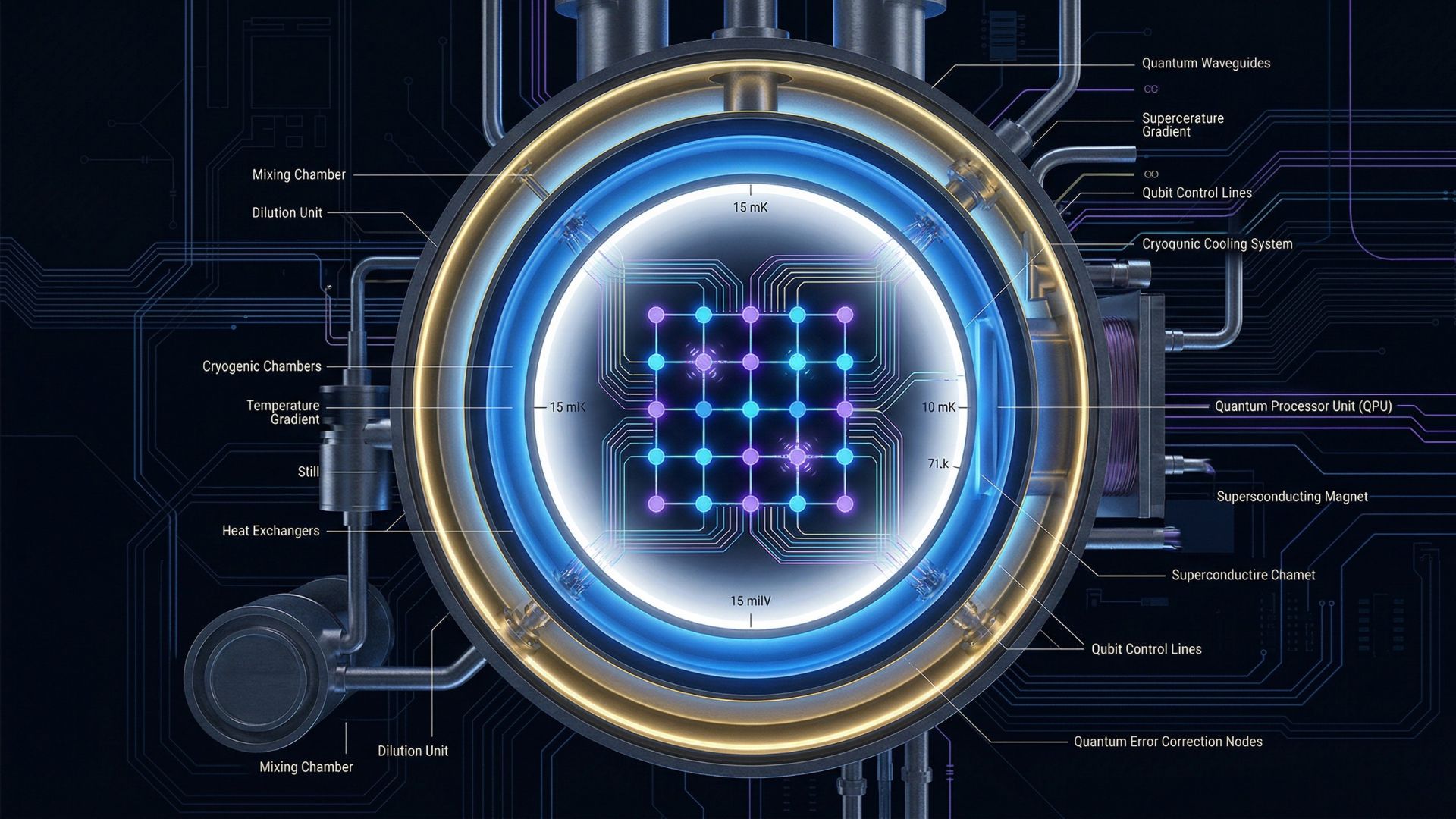
The Quantum Threshold
Fault-tolerant quantum computing crosses a long-awaited line.
The Engine of Discovery
How AI became a genuine instrument of scientific discovery.
After the Transformer
The next architectures rising beyond the model that started it all.
The Reasoning Machine
Neuro-symbolic AI learns to reason — at a fraction of the energy.
 Buy me a coffee